
Online OCD Therapy in Massachusetts
OCD is often misunderstood and misdiagnosed, and it is one of the most treatable. I'm Aiden Reis, a Licensed Mental Health Counselor and Registered Art Therapist offering specialized online OCD therapy to adults and teens across Massachusetts. I use Exposure and Response Prevention (ERP) and Acceptance and Commitment Therapy (ACT), two evidence-based approaches, alongside neurodivergent-affirming and LGBTQ-positive care. Sessions are fully online and available to anyone in Massachusetts, from the Pioneer Valley to the South Shore.
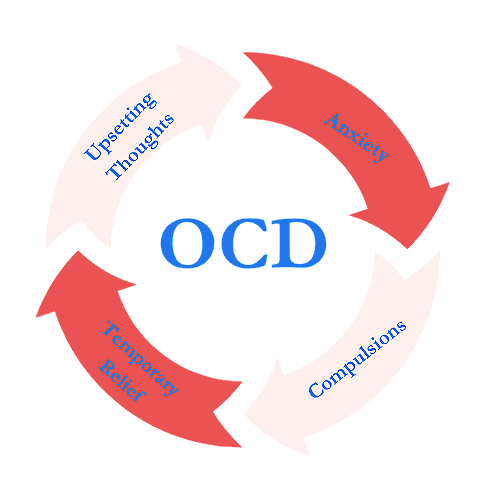
Many people with OCD experience obsessions, intrusive unwanted thoughts, alongside compulsions, the behaviors or mental rituals done to relieve the anxiety those thoughts create. The specific content of those obsessions varies widely from person to person. Common presentations include:
Purposeful harm to self or others
Accidental harm to self or others
Contamination
Upsetting sexual thoughts
Getting things "just right"
And much more
Whatever form OCD takes for you, the underlying cycle is the same: intrusive thought, anxiety, compulsion, temporary relief, repeat. The good news is that the cycle can be broken. ERP and ACT are both specifically designed to interrupt it. These therapies can help you not just help you cope with symptoms, but actually change your relationship to the thoughts driving them and build a bigger life you actually enjoy.
OCD Looks Different for Everyone

OCD and Autism — A Specialized Focus
OCD and autism frequently co-occur, and they're also frequently confused with each other, which means a lot of autistic people spend years in treatment that isn't actually targeting what's going on. Standard OCD treatment doesn't always account for autistic neurology, and therapists without specific training at this intersection can miss the mark in ways that range from unhelpful to actively harmful. As a therapist with advanced training in both OCD treatment and neurodivergent-affirming practice, and as an autistic person myself, I understand this overlap well. If you're autistic and suspect you might also have OCD, or if you've tried OCD treatment before and it didn't quite fit, you aren’t alone, and I can help.

-
OCD therapy with me involves brainstorming goals based on your interests and values and then strategizing a path towards those ends. Some OCD therapy sessions include learning specific skills to disengage from mental and physical compulsions. In other sessions we practice facing your fears together and come up with ways to practice what you learned between sessions. Exposures are always client-led, not forced; I am here to give suggestions and support you as you take on challenges.
-
OCD treatment varies in length from person to person based on a variety of factors including how long you have had OCD, if you take medication for OCD, if you have previously received therapy for OCD, as well as other factors. Clients generally see progress in their first month and notable changes by three months. I start off with weekly sessions, and then as clients progress they may request biweekly, monthly, and then as needed sessions. OCD can return in times of stress so clients are always welcome to reach back out for a “tune” up session after regularly scheduled sessions have been completed.
-
Yes, I really enjoy working with teens with OCD and this is a big portion of my practice. Whether teens are stepping down from a higher level of care for OCD or are brand new to OCD therapy I am happy to help.
Frequently Asked Questions
-
Absolutely! I consider myself very creative and have not had any issues with online remote OCD therapy yet. In fact, because we are remote we can practice working with OCD triggers where they impact you in your day to day life! For example, if OCD fears arise in your kitchen, we can do therapy from your kitchen so that you are better prepared to manage them there outside of sessions.
-
Yes, generally when people refer to pure O/purely obsessional OCD, they are referring to an experience of OCD where there are no visible physical compulsions. Instead, all compulsions are mental including ruminating, reviewing past experiences, comparing, counting, or mentally checking. Sometimes people have a hard time separating mental compulsions from physical compulsions because it all feels the same- they are all consuming and unwanted thoughts. There can be a bit of a learning curve in disrupting the OCD cycle with mental compulsions, but I am well equipped to help you disentangle mental compulsions from obsessions and to teach you the skills needed to treat this presentation of OCD.
-
Both OCD and anxiety can include worrying and physical sensations of anxiety. OCD differs in that there are physical and mental compulsions that feel necessary in order to be safe, comfortable, or prevent the fear. Anxiety can be focused on a fear of one specific thing (like a phobia of snakes) or generalized meaning worrying about a lot of different day to day things, whereas the OCD cycle tends to get stuck in patterns of fear around specific themes such as harm to self or others, sexual taboos, contamination, loss of identity, morality and more.
I have received advanced training in ERP (Exposure and Response Prevention), Acceptance and Commitment Therapy (ACT), and I-CBT (Inference-Based Cognitive Behavioral Therapy) to best support clients experiencing OCD. I am a member of the International OCD Foundation (IOCDF). I specialize in the overlap between OCD and Autism. Therapists who would like consultation at this intersection can find more info here.
Ready to Take That First Step?
If anything on this page resonated with you, I'd love to connect. Reaching out to a therapist for the first time, or the fifth time, after experiences that didn't fit takes real courage, and I don't take that lightly. We can figure out whether working together feels like the right fit.
Frequently asked questions about OCD Therapy
-
Exposure and Response Prevention (ERP) is a form of therapy that is used to break the cycle of OCD and help clients learn safety in situations previously only associated with danger and fear. At your own pace, we can challenge fears, take risks, and welcome uncertainty. All this leads to building a life worth living where anxiety and intrusive thoughts don't limit your joy, peace, and fun anymore. And time-consuming compulsions are no longer needed.
-
If you are daunted by exposure therapy, or just therapy in general you are not alone. It can be scary to face fears and try new things.
And, you don’t have to do anything you don’t want to do.
Your consent is important to me. You are in charge. I will follow your lead and support you in designing exposures at your pace to meet your goals. I am there to cheer you on.
Forcing exposure is not ethical, practical, or effective. -
Exposure does work to help Autistic and Allistic (non-autistic) people, who experience anxiety, to learn safety in situations previously only associated with danger and fear.
But I do understand where this question is coming from. Exposure to unpleasant sensory stimulation will not increase your tolerance to that sensory experience. Imagine scraping nails on a chalk board, expecting it to be less horrible after many rounds. That wouldn’t be helpful at all!
I have helped many autistic clients living with OCD, panic, and phobias to live the lives they want, with the help of exposure. -
I-CBT is a cognitive approach to treating OCD. We learn about how to disengage from OCD's tricks and recognize when stuck in rumination around doubt. Where as the learning in ERP comes from doing exposures and facing fears, the learning from I-CBT comes by looking at the thought processes involved in OCD.