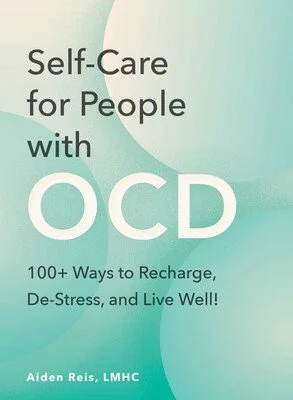
Self-Care for People with OCD: 100+ Ways to Recharge, De-Stress, and Live Well!
Recharge, find your community, and prioritize self-compassion with these 100+ exercises to help guide your journey to well-being with OCD.
When you have OCD, it can be hard to manage your wellness. Self-Care for People with OCD is here to help!
This book can help you engage in self-care without viewing your mind as an enemy. You'll find more than 100 practices to help you accept yourself, destigmatize OCD, find your community, and take care of your mental, emotional, and physical health. You'll also find ways to manage various aspects of OCD. With expert advice from licensed mental health counselor Aiden Reis, Self-Care for People with OCD will help you live your life to the fullest!
What this book is (and isn't):
This book doesn't see you as a problem to be fixed. Instead, it recognizes that you are coping the best you can, you just may need a little more support. This book provides helpful activities to try, whether you're ready to take big, bold leaps or you just need something gentle to get you through the day.
The book is organized into five areas of self-care:
Mental Self-Care — Learn about OCD, find the right therapist, advocate for yourself in treatment, and start to identify what you actually value and want from your life.
Transformative Self-Care — Take the kind of steps that change things. Work with your thoughts instead of against them, and build the courage to face what you've been avoiding.
Emotional Self-Care — Develop a kinder relationship with yourself through self-compassion, self-acceptance, and self-validation. Learn how to rest.
Physical Self-Care — Address the bodily toll OCD can take. Find ways to support your sleep, eating, hygiene, stress regulation, without shame.
Social Self-Care — Strengthen your connections, navigate relationship-themed OCD, build deeper friendships, and remember that you don't have to do this alone.
Who this book is for:
This book is for anyone with OCD who's ready to stop shrinking and start building a life you feel good about. That might look like:
Someone newly diagnosed who's waiting to access an OCD specialist and needs more support in the meantime
Someone already in therapy who wants practical tools to use between sessions or with support from a therapist.
Someone who's exhausted by the idea of fighting their OCD, and is looking for a more compassionate approach
Someone who just wants to feel a little more like themselves again
No matter what themes your OCD takes on or what it tells you to fear, you'll see yourself in these pages.

About the author:
Aiden Reis, LMHC, is a licensed mental health counselor and registered art therapist. He is the founder of Diverge Counseling, a private practice based in Western Massachusetts. He specializes in the intersection of autism and OCD using Exposure and Response Prevention (ERP), Acceptance and Commitment Therapy (ACT), neurodivergent-affirming practice, and LGBTQ-affirming principles. Aiden’s identity as a White, Queer, Trans, and Autistic person informs his clinical and educational work.
Aiden is a member of the International OCD Foundation, and their OCD/Autism Special Interest Group. Aiden provides training and consultation to therapists looking to implement OCD therapy in a neurodivergent-affirming way. He holds a master of arts in mental health counseling with a specialization in art therapy from Lesley University. Outside of the mental health world, Aiden loves to make art and spend time with his dogs, cats, and flock of chickens.